Europe's languages in the address bar
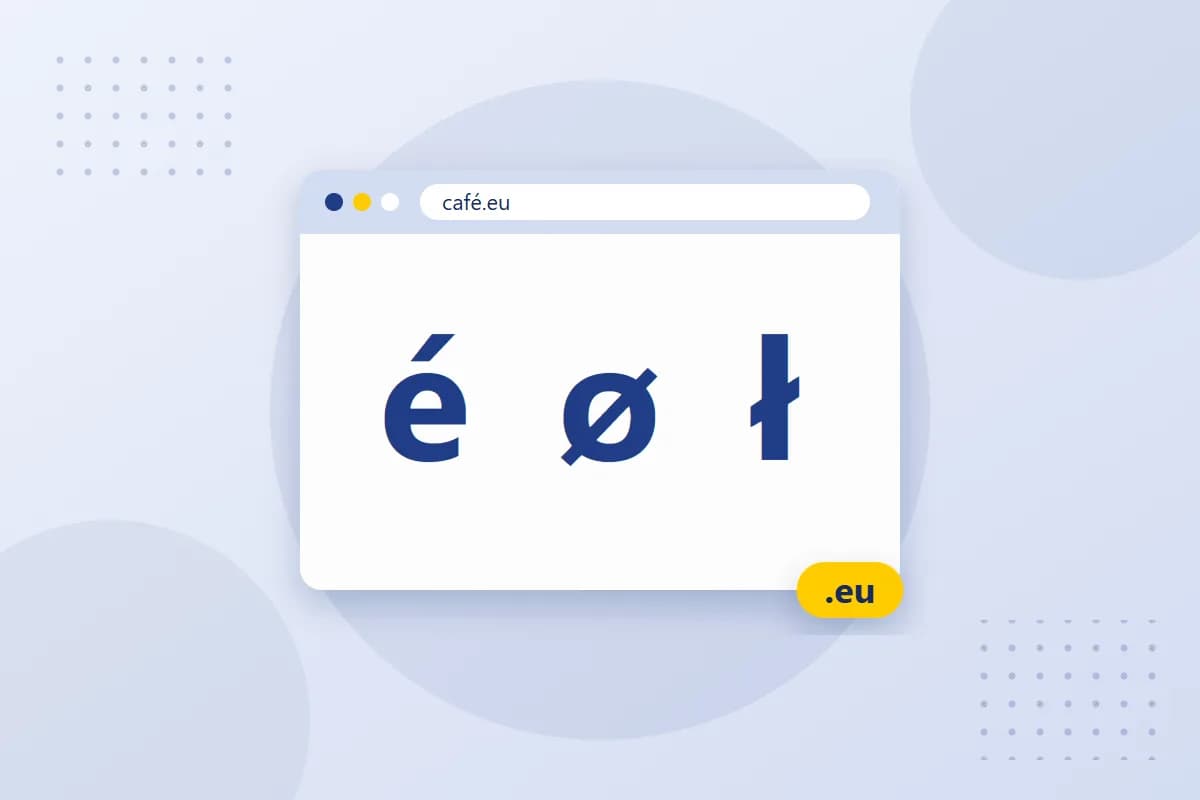
The European Union has 24 official languages and three alphabets: Latin, Greek and Cyrillic. The .eu domain takes this into account. You can use special characters of the EU languages in your domain – such as the French é, the Danish ø, the Polish ł or the German ä. Technically these are called internationalised domain names, or IDNs for short.
Dedicated extensions for Greek and Cyrillic
For names in Greek script there is the extension .ευ, and for Cyrillic names – in Bulgarian, for example – the extension .ею. This lets a Bulgarian bakery use its name entirely in its own script without switching between alphabets.
How it works technically
Behind every IDN there is a string without special characters that begins with “xn--”. Browsers automatically translate between the two forms. Visitors see and type the familiar spelling, while the Domain Name System works with the technical form.
Opportunities for brands and regions
- Authenticity: a name with the correct spelling looks trustworthy and locally rooted.
- Availability: the variant with special characters is often still free.
- Brand protection: owning both spellings prevents confusion and imitators.
What to watch out for
Not every keyboard has every special character: if you expect customers from all over Europe, you should also own a variant without special characters. Email addresses with special characters in the domain are also not yet delivered reliably everywhere. So use the simple spelling for email and redirect the IDN to your main website.
Conclusion
Internationalised .eu domains reflect Europe's linguistic diversity – and often still offer you available, authentic names. Check your preferred spelling now in our domain search.